Stress
Objective:
To explain in a short essay or with diagrams the major neural and endocrine responses of the body to behavioral and physical stress, at the level of 85% proficiency for each student.
In order to achieve this objective, you will need to be able to:
1. Observe, measure and record body responses to various stressful situations.
2. Describe the role of the nervous system in the stress response and its relationship to the endocrine system.
3. Analyze data regarding the effects of stress on human behavior and physiology.
Materials:
Group Materials:
- watch/clock with second timer
- temperture sensor
- Nonin Pulse Oximeter
- Glucose monitor
Behavioral Stress
Methods:
Work in groups of three. Work in groups of three. Obtain pulse rate and pO2 with the Nonin Pulse Oximeter as shown below.
Obtain pulse rate and pO2 with the Nonin Pulse Oximeter as shown below.
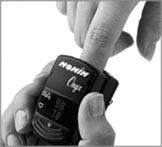
Measure Blood Glucose using a drop of blood from a finger prick and a blood glucose monitor Establish baseline pulse, pO2, and glucose.
Obtain a temperature sensor with a color indicator.
- Place the sensor on your forehead, if using a strip type temperature sensors, or
- Attach it to the tops of your hands, as shown below, if using the "BiodotTM" sensor, or
- Hold it between your thumbs and index fingers, as shown in below, if using the "Stress TesterTM"
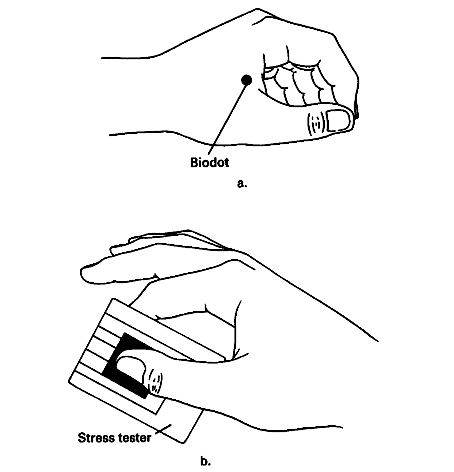
Record the temperature from the sensor. For the strip type temperature sensors record the number that is most vivid. If adjacent number are equally intense, record the average of the two numbers/
Follow these instructions:
- Place all books and notes under their desks or away and out of sight.
- Wait for further instructions.
Results
Table 1 - Behavior Stress Activity
|
Time |
Temperature |
HR |
pO2 |
Glucose |
|
baseline |
|
|
|
|
|
5 min |
|
|
|
|
|
15 min |
|
|
|
|
Discussion
- What physiological changes are the temperature sensors measuring?
- What physiological changes are the heart rate, pO2, and glucose monitors measuring?
- Does a relationship exist between skin temperature, heart rate, pO2, and glucose and the event that occurred?
- Are the changes for each event consistent for all members of the class? Why or why not?
Physical Stress
Methods:
Work in groups of three. Obtain pulse rate and pO2 with the Nonin Pulse Oximeter as shown below.
Measure Blood Glucose using a drop of blood from a finger prick and a blood glucose monitor Establish baseline pulse, pO2, and glucose.
The subject should run in place for three minutes, then the pulse recorder should take the pulse again. The time keeper should record this rate.
Results
Table 2 - Physical Stress Activity
|
Time |
heart rate |
pO2 |
Glucose |
|
baseline |
|
|
|
|
immediately after running |
|
|
|
|
10 min after running |
|
|
|
Discussion
- Why does your heart beat faster when you get excited?
- Why do your hands sweat when you are afraid or nervous?
- How do you feel when you are under pressure?
- State in words how stimulation of the sympathetic system affects all of the organs simultaneously.
© David G. Ward, Ph.D. Last modified by wardd 23 May, 2006